Eyes as Big as Plates
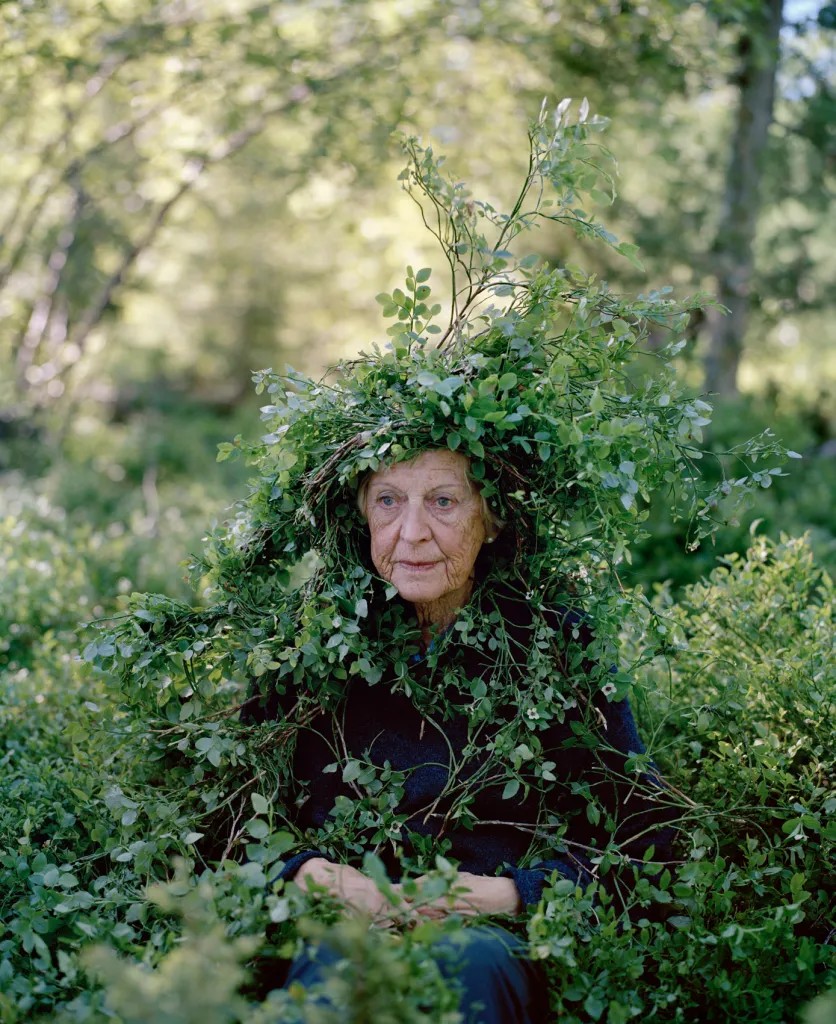
Eyes as Big as Plates (Riitta Ikonen and Karoline Hjorth) is the outcome of encounters with people, flora, fauna, and fungi across five continents. Their ongoing collaboration has resulted in 160 Eyes as Big as Plates portraits across nineteen countries.
-
25 years ago in Chile, just saying the Quechua word for ‘mushroom’ would result in jokes about genitalia. Giuliana’s meetings with senators reliably opened with these gags as callampa also doubles as slang for penis.
There was nowhere to study mushrooms in Chile, so she taught herself for 16 years! “That’s why I founded the Fungi Foundation: To help people find their ways to do something with fungi.” Giuliana is a mycologist, the first person to get fungi written into national conservation law, and the person most responsible for the campaign to add a ‘third F’ to the United Nations Convention on Biological Diversity. Fauna. Flora. Funga.
Today, fungi are no longer automatically associated with death, decay, disease or male anatomy, at least in Chile, and for Giuliana the ‘fungal boom’ of recent years feels like recognition and an act of justice.
She refers to fungi as “her”, not so much as a gender assignment, but as a language choice. “Using it is completely out of the question. Without fungi, there are no terrestrial plants or animals. Fungi are not decorative, but structural, kind of like the egg in the cake: remove fungi and nothing binds or holds.”
Geomorium furchiae was named after Giuliana, partly because the species looks like a turd. She is well known for her passion to collect and study dung. “Decomposition is not the end of something, it is the mechanism by which everything else begins. There is no beginning or end, and ends are not necessarily negative.”
A top tip for encountering new species is to simply stop to pee in the forest: “You crouch down, low to the ground, eyes at the right level, and there is the discovery, somebody nobody has named yet.” An encounter doesn’t require both parties to be aware of it. Giuliana subtracts the human from the centre of the narrative and finds the story often gets a great deal more interesting.
It’s 5.30 in the morning at Telluride and everyone is ready: Camera on the tripod, headpiece bedazzled with poop pellets, rot and mold. We wait. The last one to arrive on set is the sun.
It is the Annual Mushroom Festival and at midday, Giuliana will be leading a parading crowd of hundreds, dressed up as mushrooms and fungal love will be proclaimed without embarrassment: “We Love Mushrooms!”
-
Brit’s connection with the most recent ice age is strong. The city of Trondheim, where she has lived and worked for most of her life, is built on an old seabed, shaped through ice, rain and the fluctuating electrical charge of clay molecules. Brit has been handling marine clay as far back as she can remember, first as her favourite plaything, later as her lifelong artistic material of choice.
With a continuously packed exhibition calendar and more than forty public commissions under her belt, including art for the world’s longest two-lane road tunnel in China, the material choice for this particular portrait was therefore decided on faster than you can say quick clay. After an equally quick drive along the fjord that hugs the city, we descended in a light drizzle to a beach near Trolla with shovels and discovered Brit’s wearable sculpture right beneath our feet.
A few hours later, immersed in the elements, Brit attempted to summarize the experience: “The clay was confident today, of who was shaping who. I felt its weight, its smell, its humidity, its gurgling sound and its handling of me as a shape, and it was very much an inward journey, a meditation on my relationship with this material throughout my life. The tables had turned today, and the material that I am so familiar with and usually in full control of totally ran the show. It was finally my turn to get ‘attacked’ and handled and shaped by my own material.”
-
After a brick-wielding incident at school (the teacher hit him first), PerSille was expelled and allowed to go to sea at the tender age of 14. For 16 years, he zigzagged waters around and beyond Antarctica and Greenland as a sailor, cook, skipper and whale hunter, meeting many curious penguins and icebergs.
After a weapons-running gig, the shipping company arranged for the crew to “disappear”, landing PerSille in Tibet for six months. The oceans taught him what the stint in the Tibetan monastery confirmed: All humans are fundamentally the same, sharing the same worries, joys, and love for their families.
Now at 72, PerSille has made landfall for good at Avernakø with zero plans to travel. “I’ve seen what I need to see,” he says. He has agreed to donate his body to future medical students: “No burial, certainly no grave.” PerSille plays blues on acoustic guitar, moving through verses about champagne, swimming rats, the sloping deck and the orchestra playing to the end onboard Titanic, before concluding the performance with the note “I’m in the orchestra”.
-
Liv is the reason Karoline wrote a book about Norwegian grandmothers in 2011. She is therefore the first link in the entire Eyes as Big as Plates chain! It was an internet search for the words ‘Norway, Grannies, Photographer’ that originally led to Riitta finding Karoline ten years ago, and the artistic collaboration was born. Liv slays at Chinese checkers, knitting and ballroom dancing, and she loves to hum to her favourite song “Georgia on My Mind” while her husband Ernst plays the organ. As the youngest of eight siblings, Liv grew up on a dairy farm in Soknedal, a small mountain village in Trøndelag. “I had such a calm and nice childhood, but after sixteen years of cosy country life, I decided that a future in farming was not for me and headed to the city to study healthcare.”
Liv loves traveling and has enjoyed exploring Norway from north to south on summer vacations, even venturing on a few continental trips down south. “Still, nothing beats coming back to Trondheim, where you can safely go for walks in the woods and fields alone.” Liv’s relationship with nature is first and foremost rooted in the immense pleasure and energy she gains from coming to a place like Baklidammen, where she invited us to create this image. “My little ritual when I am out walking is to count to four while breathing in, then letting it out again while counting to five. Apart from that I always walk at a leisurely pace.”
-
Karin’s mum had to flee from her native Austria to Switzerland because her top-ranking Nazi family had held her hostage and made several attempts to murder her after she told them she was in love with and had become pregnant with a man from Nigeria. Karin’s understanding of nature and outlook on life has naturally been shaped by these events, and further coloured by her childhood, which was divided between Switzerland, Ireland, Germany and Nigeria. She and her son had just parked their campervans near Moss in Norway and were enjoying a sunset stroll when we met them while looking for participants.
The next day we all packed into Karin’s motorhome for tea and incredible stories of her voodoo grandma, taxi driving in the Alps, photography, climate change, 5G and chemtrails. “My adoptive grandfather, who I grew up with, had tons of books with images of different animals in America and Africa and he said to me ‘you’ll go and see all of that, please go and see it for me too.’ That gave me a mission and since then, traveling was always something I wanted to do.”
Karin has always enjoyed solitude in nature. She goes nuts for landscapes and light, and experiencing this on her own is something she really enjoys. “I never feel lonely as I’m always with myself. Hunting for sunrises and sunsets with my camera gives me so much joy, I really don’t need anything else.”
-
Fifty years ago, Daegwallyeong was a remote village of ten houses with challenging living conditions, and the government had just designated it as a development area. Mr Oh, who lived in Pohang at that point, was headhunted for the ‘great upgrade’ and immediately got cracking on his task with the Rural Development Administration.
Five decades later he still lives in Daegwallyeong, which has spruced up “a fair bit” through Mr Oh’s magic touch: After studies in high and cold land farming, he pioneered developments in telephone systems and created a credit cooperative, helped set the local area up for electricity, saved a few schools from being closed down, and pushed hard to make Daegwallyeong a tourist town. He eventually became the first chairman of PyeongChang’s famous Snow Festival and kept thinking about how to attract more people to the region. As one of the snowiest regions in Asia, hosting big events like the Winter Olympics and the Asian Games came naturally!
These days, Mr Oh enjoys skiing with his family, serves as vice-chair of the Daegwallyeong Senior Citizens Association, and manages a small resort.
-
Ron from Dundee is the face of the ‘Hearing Voices Network’ in the UK. He is also known as the Billy Connelly of the mental health world. One of the things he appreciates most about living in the Outer Hebrides is that “I don’t have to be him, I can be me.” Ron spent ten years in ‘the system’, mostly heavily medicated and locked up, but within a year of joining the organisation he was off medication, speaking at conferences, doing stand-up and writing about his experiences, and has never looked back. Ron has always loved storytelling and “thinks a good story can do just about anything.”
His book We all Flew Over the Cuckoo’s Nest chronicles funny stories from psychiatry. Ron told us how people who hear voices often ended up in institutions with a schizophrenia diagnosis until a Dutch professor of psychiatry was challenged by one of his patients asking him, “How is it okay for you to go to church and speak to God, but when ‘he’ speaks to me and I answer ‘him’ back, I am schizophrenic?” This got the professor thinking. He sat his patient in a room with two others who heard voices and was gobsmacked to witness the three start talking about their experiences. They went on to a Dutch evening TV programme to discuss hearing voices and asked for other people who also heard voices to get in touch – and were inundated with responses. Further studies concluded that a percentage of the population in and outside of the services hear voices and that the voices of up to 70% of people in the services correlate to lived experiences such as childhood sex abuse – not a biological illness.
Ron retired from international touring last year as he was beginning to forget things. Technology affords him his independence now despite the smorgasbord of challenges, like dementia, that come with ageing. His pet project is to spend hours in his office with his tech, working on a new podcast. When he is not engulfed in mics, screens, booms and headsets, Ron parks himself in the upstairs bedroom in front of a fancy skylight that pops out into a little step-out veranda overlooking the vastness of the Atlantic Ocean. “I’m like a lot of people who like humour, not sociable at all. I use humour to cover up my shyness.” We finish our coffees and gear up to face the brisk breeze blowing in from the north. Just before Ron pulls on his jumper, we catch a glimpse of his tattooed bicep: ‘Psychotic and Proud’.
-
After a long career as a skilled tradesman in South America, Velkkari settled on this little farm in North Karelia in eastern Finland, just a couple of eskers from Riitta’s grandmother’s place. We arrived unannounced with Riitta’s dad, who was touring the neighbourhood to say hello and wish everyone a happy midsummer. On these shoots often the only instruction yelled from behind the camera is, “Please don’t smile!” Velkkari was a natural born poser and seemed immune to mosquito bites on this midsummer afternoon. He had been planning on cutting this field of cow parsley, but luckily we beat him to it.
-
Pupi and Karoline met years ago aboard the Christian Radich. They were racing against other tall ships just off Pupi’s hometown of Kotka on the south coast of Finland. She still spends most of her time sailing around the world, so we were lucky to catch her on dry land. After a long search up and down the parks and beaches, we ended up finding the perfect location at Fort Katariina. This marine park was the origin of modern Kotka and, on this day, offered the ideal stretch of bedrock covered with flowering moss. Most often the model gets to stay in formation for at least two hours, just taking in the scenery with its sights and sounds, while the final portrait is under preparation. However, events turned a little bit more dramatic, and it was only after Pupi was in full bloom that we found out she was allergic to flowers. The image was ready in record time – less than five minutes!
-
Márros Biehttar Uulla ja Ánddir Ánne Márdja Nilsemanna Gunn-Tove works as an emergency ward nurse and a reindeer herder in eastern Finnmark. She welcomed us to join the reindeer round-up in Krampenes to better understand and appreciate the Sámi culture through reindeer husbandry. Gunn-Tove inherited the reindeer herd just after finishing her medical studies and her son will take over her reindeers within the next decade due to her arthritis. If you’re looking for a career in reindeer husbandry in Norway, you have to belong to a Sámi family, or you can always fall in love and marry into a herding family. Twice a year the free roaming animals are rounded up, marked and set free or sent for slaughter, and Gunn-Tove always looks forward to seeing her reindeer cows and checking that they’re healthy and nicely chubby. The schedule for this operation is heavily dependent on weather and the movements of the herd.
Gunn-Tove hopes that the policy-makers will wake up to the importance of existing local knowledge and allow the reindeer herders to slaughter their animals humanely in the field. The slaughterhouses’ schedules also rarely take into consideration factors like the moon, which plays a big part in the Sámi culture and affects practical issues such as removing the skin: it pulls off much easier when the moon is waxing. The best time to get a skin for a winter coat is also not necessarily the most profitable time to slaughter your animals.
Gunn-Tove forced her mother to change her surname when she was nine, since it’s connected to a long-established reindeer-herding family and would have led to intense bullying. Her son encouraged her to make the change back to her original family name less than a year ago. “There’s a lot more pride connected to being Sámi nowadays and my hope lies in strong, powerful women who communicate what’s at stake and push forward change for the better. We need to communicate to the general public what reindeer herding is and how it needs to be handled in order to survive.”
-
The rising sun was forcing traffic to a blinded crawl on the Turku motorway. Anu stared into the sun and decided she was done. No more jamming, she wanted adventure! She moved to North Karelia, the promised land of kick sleds, ice roads and hammocks.
Today Anu is the chief of the Vuonislahti village. Her title comes without authority, but with high viz vests full of responsibility. Her fellow two hundred villagers are experts in ‘talkoot’, which curiously doesn’t have a word in English, but could be translated to ‘collective voluntary labour for the sole reward of doing the work together’.
Vuonislahti’s biggest annual event is the ‘Vendace market’, when around 2000 people gather in the name of fish and fun. We pulled Anu aside on the second biggest event day of the year: ‘Get to know the ice road’. The ex-mathematics teacher-turned IT pro-turned- chief, explained patiently over a snow sculpting session, how flexural waves travel outward from a moving vehicle, why seatbelt wearing is discouraged, how doing donuts stresses the ice and how the 7 km road is essentially alive; the villagers can hear the ice pound the shore if someone is speeding far out on the ice.
“It used to be more or less a given that the road would open each winter. Now, in several winters since 2000, we just haven’t had strong enough ice to open.” For there to be a chill hammock and post-box-lined ice road for cars and skaters, the lake water needs to freeze slowly. Snow and air bubbles interfere with the forming of the gold-standard road material, the dense and clear steel ice, the densest and most load-bearing ice out there.
With the weather being unpredictable at best, Europe’s longest inland ice road is playing a game of ‘now you see me now you don’t’. You lose the ice road, the 10 minute zip across the lake, and you lose time; the lakeside route adds nearly an hour to Anu’s journey to Koli. Thanks to the villagers’ fierce and optimistic campaigning, a new ferry service now crisscrosses the route during the less icy months.
-
Mrs Nerimova was born in Brno in the former Czechoslovakia, then moved to Prague where she worked as an office clerk for the Ministry of Industry for 30 solid years. When she wasn’t working she kept busy with drawing classes, exhibitions, theatre plays, illustrating book covers and spending her holidays picking mushrooms at her cottage in South Bohemia. These days her hands aren’t quite the same when it comes to drawing, so she has branched out into other art forms, like modeling for Eyes as Big as Plates! Her love for the great outdoors hasn’t changed one bit and, together with her three fellow gang members from the Malešice senior home, the team headed out into the woods.